









Virginia Association of REALTORS®
Trade Mission to Tokyo and Osaka, Japan
October 2003


Official VAR Delegation:
Faye Dillman, International Advisory Group Vice Chair
Thomas Jewell, CIPS, President Elect - Virginia Association of REALTORS®
Dave Macpherson, Chair, VAR Commercial Council
Phyllis Willoughby, CIPS, International Advisory Group Chair
Carole Umbel, Virginia Association of Realtors

Photos | Report by Tom Jewell | Report by Carole Umbel

Photos


VAR 2004 President Elect Tom Jewell, far right, presents gift to Taketsugu Sugiura, Chairman of General Affairs Division of NFRETA and on left David Macpherson, Chair of the Commercial Council/VAR, presents gift to Shinji Fukui, Senior Managing Director of NFRETA.


VAR Delegation to the Summit with President of NFRETA, Kazuo Fujita. From left to right in the picture: Carole Umbel, Specialties Manager/VAR; Faye Dillman, 2004 Vice Chairman of the International Group, Tom Jewell, 2004 President Elect/VAR, Phyllis Willoughby, 2004 Chair of the International Group/VAR and NFRETA President Kazuo Fujita.


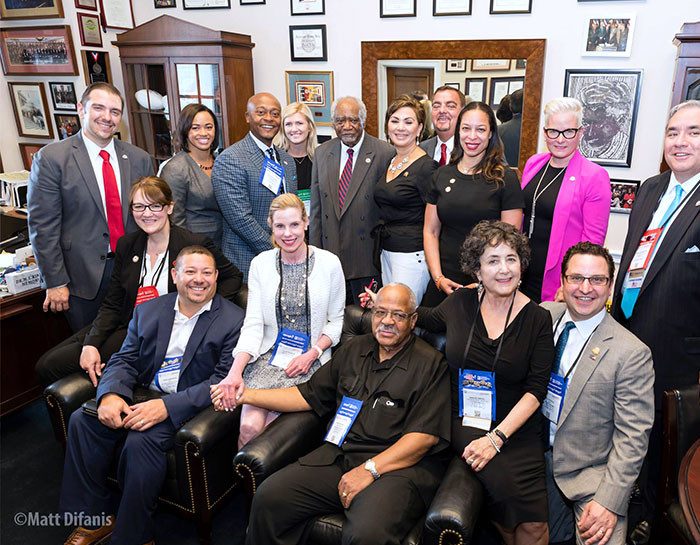
VAR Ambassador Association to NFRETA met with NFRETA leadership following the Summit. From left to right: Taketsugu, Sugiura, Chairman of General Affairs Division, NFRETA; David Macpherson, Chairman of Commercial Council/VAR; Faye Dillman, 2004 Vice Chairman of International Group/VAR; Morris Goins, NAR President's Liaison to NFRETA; Phyllis Willoughby, 2004 Chairman of International Group/VAR; Carole Umbel, Specialties Manager/VAR; Barbara Nesbitt, Executive Director, Japan Virginia Society; Tom Jewell, 2004 President Elect/VAR; Shinji Fukui, Senior Managing Director, NFRETA


Monday, October 20, 2003
Breakfast, and then off to a meeting with the NAR delegation - President Cathy Whatley, Past President Martin Edwards, Incoming President Walt McDonald, NAR's Chief Economist David Lereah, Miriam Lowe of the NAR International Section, Takashi Misawa and Jonathan Kaji, the two men who had organized the Summit for NAR, and Morris Goins, NAR President's Liaison to NFRETA - first at the Hotel Okura and then at the U. S. Embassy. I was expecting a really great embassy in Japan, the world's second greatest economy and our biggest trading partner. Wrong. This place looked like it might have won an architectural award in the 60s (I'm being kind) but truly had been a victim of benign neglect from that point on. It needs a major facelift. Government issue leaps to mind when describing the furnishings, no, let's just say everything in this place. I'm not saying it's really bad but after our briefing, THE Commercial Attaché, Stephen Jacques, invited us to visit the Embassy gift shop in the cafeteria. Tacky doesn't quite describe it.

After that, we went with the NAR delegation on a visit to the Roppongi Hills Development which was absolutely fantastic. Everything is here. Condos, offices, shops, earthquake resistant construction, just unbelievable, including the Mori Art Museum on the 52nd floor and the garden on the roof which is eight feet deep and is an integral part of the earthquake resistant design.

Next we went to the Takanawa City Tower Formal residential condominium project where even we real estate "experts" couldn't figure out what the per square foot purchase price was.

Japan - U.S. Real Estate Industry Summit Details

Tuesday, October 21, 2003
It didn't take long after arriving to see what the make up of Japanese high real estate business was. Males, almost all of whom were well into their sixties or older made up almost all of the room. Everything is hierarchical, very formal and very dignified. A more outstanding observation of the one hundred fifty invited guests was that there were two females from NAR, three females from VAR and seven Japanese females, all service workers. Male dominated doesn't even begin to describe this situation. The meeting was a smashing success for VAR in that NAR included us all along the way and even invited us to be part of the gift giving process - an ultimate honor with no corresponding ceremony or importance in American business.

At the end of the Japan - U. S. Real Estate Industry Conference ("The Summit") NAR President Cathy Whatley came up to me and said, "Tom, every once in a while something extraordinary happens and this is a case of Virginia being at the right place at the right time."

A few observations of the actual physical makeup and setup of the meeting: It was very formal, deferential and hierarchal. Everything was provided for at the main table but nothing for the remainder of the audience. In a Japanese business meeting such as this, we should stay conservative- black suit and white shirt for men, black, dark or muted colors for women, definitely not bright colors. All of the major participants were males and most were well over sixty years old - what some referred to as the problem. Not a single female was present except in a support position. American real estate is organized vertically - local, state, national - while Japanese real estate is organized horizontally NFRETA, etc. Part of this has to do with the fact that our two industries operate in a totally different manner.

Phyllis Willoughby, Faye Dillman and Carole Umbel were very quick to assess the situation, to realize that we were in a totally different business environment and to decide that the greater good for VAR was to take advantage of an incredible business situation and to worry about social issues at another time.

This trip was not inexpensive. However, we should have been better prepared for the financial obligations and better prepared for more people to have been in our delegation. The Policy Board must have a quick and massive education concerning this project we have signed on for. I said this trip was not inexpensive. We spent more than was allotted and I take full responsibility for that decision but the decision had to be made on the spot. However, I must point out that we found ourselves in a situation where other people assumed we had done our homework and took us under their wing as if we had. NAR included us in almost all of their meetings and events and took us along at their expense. NAR President Cathy Whatley, Past President Martin Edwards and President Elect Walt McDonald treated us as equal parties at every turn. Whether it was a briefing at the U.S. Embassy, private meetings with business leaders, small private confidential sessions, dinners, whatever - we were part of the group whenever possible. And in an event of enormous proportions, Cathy Whatley included Virginia in all of her remarks at the Summit meeting and invited me to participate with her in the presentation of gifts to the Summit's main speakers. There is simply nothing in its importance in American business practice which equates to this gift giving ceremony.

And one of the reasons we were allowed to participate was the foresight of Carole in having brought Virginia related gifts from Virginia and Faye's knowledge to wrap the gifts in rice paper - a huge hit with the recipients and a fact not lost on the NAR leadership.

I approached this trip wanting to get VAR started on a path of being known for business development as well as being known for its sterling representation for lobbying for member issues. With this trip to Tokyo, we were able to not only get to first base with NAR and the Japanese but also to probably round second. It is no exaggeration to say that at the October 21, 2003 Summit, Virginia hit a home run.

With that home run comes an incredible amount of responsibility. More Policy Board members must be involved. Proper funding must be planned and planned for events in the years to come. But this is an investment that I am convinced will bring us enormous returns. And I cannot thank the NAR leadership enough for their investment in us here at the beginning. What they did for us would have cost tens of thousands of dollars if we had to do it on our own. This fact cannot be overstated.

Wednesday, October 22, 2003
Carole, Phyllis and I met with Sam Sadamura, Masayoshi Fujisawa, Noriaki Shiomi and Yasunori Yamamoto (Sam, Mark, George and Tiger as they told us to call them) regarding IREM, CCIM, CPM and other property management issues. They peppered us with questions on how the property management business was conducted in the states. It turned out that they operate on a smaller scale of units than we do whereby a property owner has a manager manage his individual building. The concept of property management companies managing large numbers of units does not exist. These four men were a totally different group from the men at the summit. Probably in their thirties, they were nattily dressed, very friendly and animated, less formal and reserved and totally interested in us as individuals. They had brought with them the latest gadgets which included the smallest Panasonic PC I had ever seen (in a stainless steel case); picture phones and a couple of items I still don't know what they were. However, there were some consistent patterns. The presentation of the business cards, although a little less formal, was nevertheless very important.

The Japanese are not large consumer goods consumers like Americans. Space is an incredible luxury item in Japan. There are no walk in closets or other options like that. Mark showed us a new eleven unit apartment building he manages where the owner got higher rents than normal because he had figured out a way to lift up panels in the floor between the joists and use the space underneath the floor for storage. Very simple premise - more storage, wherever it might be, meant higher rents.

Back to similarities. Personal appearance was, as usual, very impressive. These guys looked successful and dynamic. They had energy. They focused on our comments and acted like we were honored guests from whom they could learn. Much more than Americans, they didn't drift from the topics at hand.

After an hour and a half, we exchanged gifts. Carole had IREM koozies and very nice IREM brass coasters for each of the men. Although they were delighted with the gifts, it was obvious they did not know what the brass coasters were. I put a tea cup on one coaster for them and their expressions were priceless. They had discovered something new and would have something their friends and business acquaintances did not have. For whatever reason, a standard item in the States was not one in Japan. They presented us with very beautifully wrapped 2004 Japanese calendars.

Thursday, October 23, 2003
Lunch followed with Morris Goins where we talked about the upcoming meeting with NFRETA. Leaving for the meeting, out drivers could not find the office because of the Tokyo numbering or non-numbering system. Buildings are assigned numbers based on when they were built, not street numbers, so finding anything in Tokyo is a challenge.

Our meeting with Shinji Fukui and Taketsugu Sugiura at NAFRETA was very productive. Barbara Nesbitt of the Japan - Virginia Society met us there. We had a great exchange of questions and answers and the two gentlemen, while the same age as the men at the Summit, were much more engaging and willing to talk to the ladies. I believe we will be seeing more of these people, especially in the states. They seemed very willing to consider coming to our VAR convention, even more so when they discovered that it would be in Atlantic City and had gambling.

One of the incredible facts that we learned about Japanese real estate in the meeting was that there is no value placed on the improvements on land. Land is so valuable and such a prized commodity in Japan that all of the value is placed on it and nothing else. Income of the building is, of course, important but the building itself is considered a liability. Also, sales prices of land and buildings are not public knowledge and all parties seem intent on keeping it that way. They see the American system with pubic access to information as an invasion of privacy.

Buildings are always being torn down to make way for new buildings. They refer to this as "Urban regeneration" not "urban renewal" as we do. Another fact was that there is no private ownership of any beachfront property. It, like most of the mountain area, is owned by the government.

Friday, October 24, 2003
Off to the Tokyo Train Station for our trip to Osaka. The trip through the "countryside" toward Osaka was also enlightening. The Japanese use every bit of land for a purpose. Gardens butt up against factories, rice patties are next to train tracks, playing fields are next to rivers and cars are parked everywhere - but always in an orderly manner so as not to be obtrusive. And, of course, housing is everywhere. Since land is at such a premium, houses tend to go up instead of out and there are far more apartment buildings than here in the states. But, again, everything is so clean.

We arrived in Osaka, a huge bustling city and were taken to our hotel, The New Otani, which was beautiful. The staff wore what seemed to be green tartans and bent over backwards to serve. Everything is spotless. Our room overlooks the River and the Osaka Castle. How it could be better I don't know.

Saturday, October 25, 2003
We met the rest of the group and took off for our self guided tour of Asaka Castle, lunch at the castle and then a boat ride on Osaka's Okawa River.

Sunday, October 26, 2003
At 7:30 AM, exactly, out tour bus left for Kyoto, the ancient capital of Japan. Our tour guide told us that Kyoto means "Capital City" and Osaka means "Big Slope." Japan is the size of California but with 125,000,000 people crammed onto 25% of the land, the rest being mountains.

We went first to Nijo Castle and its "nightingale" floors of the Shogun Tokugawa Ieyasu and then to Kinkakuji, the golden temple built by Shogun Ashikaga Yoshimitus. We learned that if it's a temple, it's Buddhist and if it's a shrine, it's Shinto.

The Japanese believe that all gardens must reflect nature. Since Japan is an island, all gardens must have an island. Odd numbers are lucky for the Japanese and even numbers signify bad luck (our hotel had a 13th floor). The number 8 is an exception. It is considered lucky since the lotus flower has eight holes in its stem.

Lunch followed at the Kyoto Kokusai Hotel and then shopping at the Kyoto Handicraft Center. The tour's last stop was Sanjusangendo, featuring 1001 statues of the Goddess of Mercy. We arrived back at the Hotel at exactly 4 PM.

A reception in the Virginia Suite on the 18th floor and the welcoming dinner concluded the day.

Southeast U.S. Japan Summit Details

Monday, October 27, 2003
The day started off with a Delegates' Buffet Breakfast, followed by the Opening Ceremony. The two Chairmen (one from Japan and one from SEUS) spoke, followed by the Mayor of Osaka, then the highest ranking member of the delegations from South Carolina, Alabama, Florida, Georgia, North Carolina, Tennessee and Virginia, concluding with the Japanese parliamentary Secretary for Foreign Affairs.

The Chairman of the Kansai Electric Power Company spoke at Plenary Session I followed by a luncheon and speech by the Consul General of the United States of America Osaka-Kobe.
Carole, Dave, Phyllis and I each went to a different break out session, then got back together for a Panel Session led by the Chairman of Fuji Photo.

It is very difficult to find the superlatives to describe the "Cocktail Reception and Dinner" which followed at Studio 33, Universal Studio Japan. The Terminator, Back to the Future, E. T. and incredible food and drink don't even begin to describe an evening I will never forget.

Tuesday, October 28, 2003
We attended Plenary Session II where the main speaker was the Chairman of Toyota Motor Corporation. At the conclusion of the session, we took taxis to the Osaka Train Station to get the Bullet Train back to Tokyo.

Wednesday, October 29, 2003
A long flight back - but shorter than going over thanks to tail winds. A very satisfying feeling coming from a very productive trip. The main event I will remember from this day was that I got to see the sun rise twice.

Back to Top

The following highlights were submitted by Carole Umbel:


US Embassy meeting

Monday, October 20, 2003

  • Japan is 2nd largest economy in world but has limited growth.
  • Japanese want to know: 1) what is good and 2) what is bad
  • They lack knowledge on how build a market
  • Smaller manufacturing companies are leaving due to cost to stay in business in Japan.
  • It is less expensive to build and operate in China - more work force availability and lower wages paid.
  • Japan is looking at US to expand current companies and to re-build current companies
  • Commercial/property management/developers do not have knowledge on converting commercial buildings to residential units.
  • Do not have knowledge on adapting buildings for handicapped or elderly or for creating outside esthetic value.
  • There is an over supply of building space in the commercial market.
  • Loan value ratio is 50% loan to value up now to 80%
  • Loans made based on income (must be at least $75,000 to $80,000) and on gender. Older Japanese cannot qualify do to life expectancy. Some mortgages are multi-generational.
  • In last few years females have been granted loans but again based on age and income.
  • Most mortgages held by banks at 1.5 +/- %. If a default occurs, bank does not foreclose but continues holding bad debt.
  • Very few incentive programs in place for purchasing.


Tour of Roponngi Hills

  • Roponngi is a multi use very large facility incorporating office, condo, and shops. Two towers, one 55 stories with a cultivated garden on the roof and another with a large art gallery. All new buildings are built with earthquake damage control installed. Roponngi is also a nightlife area especially for young adults and includes many restaurants, higher priced shops and caterers to high-end residents.
  • Takanawa is in process of being built and offers condos for sale. Units start at about 450 square meters for what equates to about $1000 per month. Purchaser should have 20% down to even be considered. Units are what we would consider very modern in design. The 2-bedroom unit has one of the bedrooms that to us would resemble a walk-in closet. Very different way of living that what we are used to.


Japan - U.S. Real Estate Industry Summit

Tuesday, October 21, 2003
The Summit was a very enlightening conference. Attendees were from all four major real estate organizations in Japan. Speakers were from the finance and research areas of Japanese government offices. Other than press attendees, almost all were over 60 and male. Very difficult for Japanese to understand how the real estate market works in US. In Japan, it appears that financial institutions control the real estate organizations to a degree. They are very closely aligned. Had trouble understanding why these groups were not members of 'The NAR'.

Purpose of Summit was to bring all active real estate associations, government agencies, and financial agency to the same table with NAR to sign a cooperative agreement. This agreement will continue and expand the agreements currently in place. It was clear the Japanese had questions about the why real estate and government were not dependent on each other. Persons representing the Japanese organizations were probably 98% older and all male. Only Japanese females attending were staff from the various organizations. Cathy Whatley along with Miriam Lowe were the only females at the table. VAR President Elect Tom Jewell was recognized along with Cathy in the presenting of gifts to the major Japanese speakers.

Wednesday, October 22, 2003

  • JREM leadership was much younger and very interested in education and training.
  • Tom, Phyllis and Carole met with leaders of JREM (Japanese Real Estate Management) group. Members are CPM designees and candidates.
  • This group is only 3 years old and had a cooperative agreement with IREM. Different than real estate group, this group was much younger and very anxious to get rid of government control of industry. Only very few of the individuals active in the property management area are trained. Much like VA, license not required if the person is an employee of the firm. The PM firm is generally hired by the developer and/or owner. The employee earns income based on base rate plus percentage.
  • JPNA (Japanese Property Mgt. Association) is a Foundation under Japanese Law. It is the education foundation for the property management area. In Japan the company has the license to practice and there are over 20,000 companies. Membership is only 50/60 companies with about 2500 employees in those companies. They specialize in retail management. Community associations must be licensed. The average rent for an apartment of 43 square meters (about 450 square feet) is 10,000 yen (approximately $1000). JREM has several local groups or branches: Keici, Osaka, Suki. The employees earn a base rate plus commission of about 7/8 %.


Thursday, October 23, 2003

  • NFRETA consists of 47 real estate transaction associations, each of which represents a prefecture in Japan. Members belonging to these 47 prefectural associations (real estate agents who are members of each association) represent about 82% of all licensed real estate agents in Japan. The NFRETA is Japan's largest trade organization in the real estate industry, and is authorized by the Law Concerning Real Estate Transaction business.
  • NFRETA consists of the President, 3 Vice Presidents, 1 Senior managing director, 15 managing directors, 86 directors, 4 auditors and 20 staff. The general structure includes five divisions: General, Public Relations, Management, Political and Educatoin/Research.
  • Entire group met with Morris Goins to plan meeting with NFRETA.
  • GREAT MEETING! Very friendly and lots of questions about methods of doing business including how MLS systems operate. Expressed some interest in MRIS since they had been contacted earlier. Tom offered to set up meeting for them in states. They showed great interest in attending 2004 convention in Atlantic City as they like gambling. Discussed structure of association - very similar to state/local set up in VA. Brokers licensed, agents are considered employees so license not necessary. Must reapply every five years and exams given by government.
  • Property value is based on past value of the land (not building on the land). Buildings are considered as personal property. The government declares the value of the land at all levels. Government does testing for licensure with renewal required every five years. NFRETA delivers the actual test. Education to members is provided at both NFRETA level and the local levels. The licensed broker is the member, not the individual agent. NFRETA is the largest of the three real estate associations in Japan. Japan Real Estate Association is composed of mostly developers and they oppose access to public information. NFRETA would like very much to have public information especially on sold or comps.


Southeast U.S. Japan Summit

Sunday, October 26, 2003

  • SEUS sponsored tour of Kyoto (first capitol of Japan) Japan is roughly size of CA. CA has 25 million people. Japan has 125 Million living on about 25% of the land since 75% of the island is mountainous and Japanese do not live in the mountains.
  • Kyoto and Osaka are part of Kanasi region. Kyoto has population of 80,000 and Osaka has 2.5 million. Osaka means 'big slope'. Osaka was originally built on the side of a mountain. That mountain was destroyed due to earthquakes and the war. There are 1600 Buddhist temples and 400 Shinto shrines in Kyoto.
  • SEUS CONFERENCE - 2004 will be Oct. 9-12, 2004, Atlanta, GA
  • China is 1/25 labor cost compared to Japan. Japan is moving some manufacturing facilities to China.
  • Virginia has 100 Japanese firms with $1.2 billion invested and over 10,000 employed. Japan is the 2nd largest exporter from VA. China will be biggest US competitor. The work ethic and habits between Japan and the U.S. are different. Japan companies look for highly motivated and ethical work force potential.


Kansai region statistics:
Biggest issues are: developing a strategy for growth and building. Over 36% of Japanese goods are exported to China. There is a 6.7% unemployment rate in Kanasi region. Kansai is looking for three-way agreement with Japan, China and US. They are actively seeking investments for the area. The region is promoting culture and creating new industry. They are looking to develop and offer products that offer unique value. With the history of the area, they are also looking to become a world-class cultural center inviting more tourism. Kansai needs more cultural exchange investments.

Politics plays a very big role in Japan's economy.

How to work with foreign companies after they arrive:
Economic development is community development. Common sense says get to know your neighbor. Localities need to be more aware of international mix in order to increase both economic and community development. Look at the entire family when company is relocating, not just the worker. Four items in particular:

  1. Human capitol - very skilled and trained work force
  2. Industrial capitol - commercializing the products (marketing)
  3. Financial capitol - $1.5 trillion - individuals have lots of dollars to spend
  4. Political capitol - after 911 big changes are coming

Other concerns:
  • Aging facilities and labor unions are a concern
  • The companies will construct new plants to avoid problems
  • State leaders need to welcome new Japanese companies
  • Appreciation shown is very noticed
  • Utility aid and tax incentives are important
  • Companies are concerned about steady workforce
  • They look for continuous service and are willing to train workers.
  • Need assistance on infer structure
  • Offer a one-day seminar for executives of Japanese firms highlighting what help is available; provide nuts and bolts of living in the area. This is called 'SERVICE AFTER THE SALE".


Kentucky offered the following suggestions:

  • They formed the Japan Business Advisory Council of KY. They hold two meetings a year. The council is composed of top Japanese leaders and Governor. IT provides ability for company leaders to meeting and talk with government leaders one on one.
  • They use the team approach (federal, state and local) and politically work across party lines.
  • A go and see attitude is needed
  • The company offers tours of the facility and the public should visit in order to get to know them better.
  • Establish and maintain contact with local officers on a regular basis.
  • Provide education needs such as Saturday schools.
  • Include family and spouse in community activities.
  • Provide one on one assistance of everyday issues (Welcome Wagon concept)


Foreign direct investment: opportunities and lessons learned
Japan is the 2nd largest economy in the world. Over 40% of the worldwide GNP is through US and Japan. Japan needs to find way out of the deflationary budget situation. She needs to cleanup the non-performing loans and put dollars to better use. Structural reform needs to occur or there will be no growth. The relationship between US and Japan is the most important in the world - bar none. They are both allies and friends as well. Japanese government offers seminars on investing in Japan. The US has 12.5% foreign investment; United Kingdom has 29% while Japan has only 1.1%.

In the Kansai region 15,000 student visas are issued per year. Over 100 US companies are located in the area including: Proctor & Gamble, Eli Lilly, Abbot Laboratories, Ford (Mazda) and Universal Studios. There are over 18,000 US residents living in the area.

Information for consideration from the Japanese Economic Journal

  • Companies will move from north to south in the US
  • Southeast US offers great opportunity for Japanese companies to relocate there
  • Highways, ports and air facilities are available
  • Labor cost is stable
  • Government has been aggressive in helping by providing market research, incentives and matching invested needs


President of Toyota, Fujio Cho made the following observations in his presentation:

  • Toyota experienced 16.7 million units sold
  • Structural reform is becoming more evident
  • US is most important to Toyota
  • 1.8 million units sold in US
  • 1.0 million produced in US
  • 30,000 US employed by Toyota
  • Will expand to Texas in 2006
  • 1.6 million units predicted for 2006
  • Toyota has 115 suppliers located in the southeast


President Cho gave three important items to those relocating to the southeast: golf, resort property and fishing. He also indicated Toyota has a vision - The Toyota Way. They focus on Collective Wisdom and improved values.

There are opportunities through globalization. To have local economic success it means you must think globally. Item for future consideration - fuel cells for vehicles including hydrogen stations. The cars are already being made, fuel not available.

Back to Top


Print Format
E-Mail Article